Emergency guide
Pet emergencies & tropical hazards in Pattaya
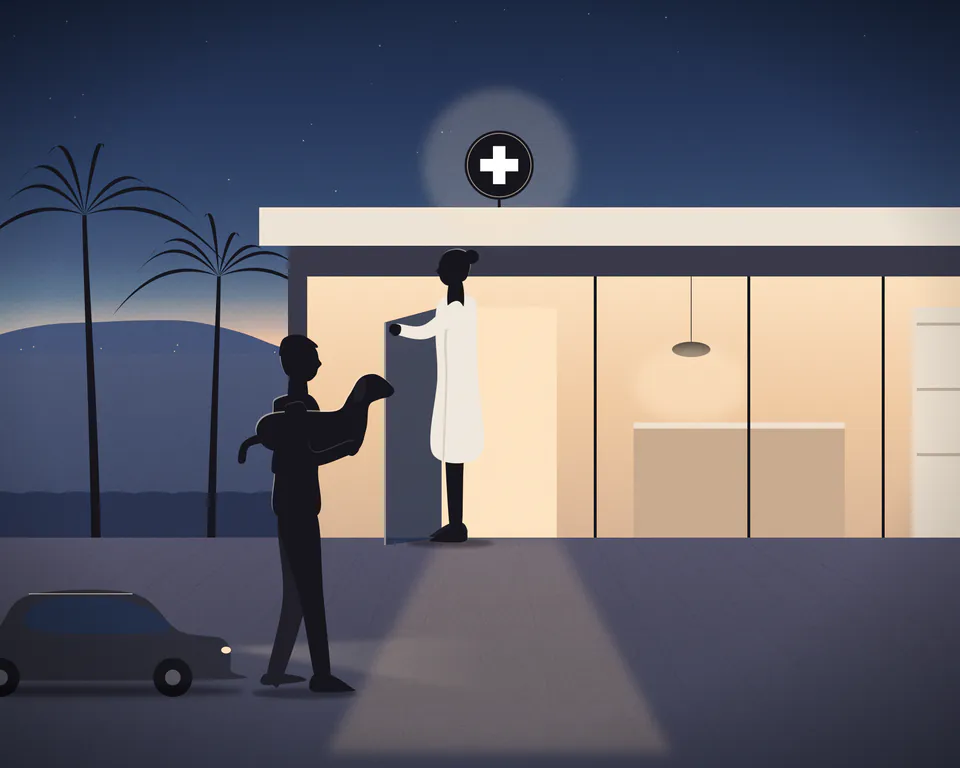
Recognise distress, contact a clinic that confirms it can receive the animal, follow live instructions and travel safely.
Background & sources
Before you start
Call a veterinary clinic now, describe what you observe and ask whether it can receive the animal immediately. See clinics listed as 24 hours, but confirm current emergency intake before travel; a published-hours label is not a guarantee. If you need transport, read getting your pet to the vet. Save several current clinic contacts before you need them.
For everyday prevention, see hot-climate pet care, ticks & fleas, and where to walk your dog safely.
This hub is for animal emergencies only. For a human emergency, contact human emergency services or a hospital instead of a veterinary clinic.
No licensed veterinarian has clinically reviewed this page. It provides only narrow first-aid orientation where explicitly stated, not diagnosis or a treatment plan. In a current emergency, call a veterinary clinic now, follow its live instructions and travel as the clinic directs; do not delay care to keep reading.
Tropical hazards to know
Tropical hazards to know (7)
Conservative orientation for possible tropical-climate and outdoor hazards.
Heat illness
Urgent veterinary contacts, live instructions from a clinic and general prevention.
Ticks & fleas
Build a species- and product-specific prevention plan with a veterinarian.
Snake bites
Call-first action after a possible bite, without a home-treatment method.
Street-dog encounters
Walking your dog safely around Pattaya's free-roaming dogs.
Poisoning
Preserve exposure information and call a clinic for live instructions.
Dog beach & sea hazards
Jellyfish, hot sand, seawater and tideline scavenging by dogs.
Toads, centipedes & stings
Venomous creatures beyond snakes, and what to do.
Related reading
For the four Pattaya and Si Racha hospitals that publish 24-hour care, with branch phones, species and check dates, use 24-hour vets in Pattaya.