Clinical review status: no licensed veterinarian has reviewed this publication. It is source-led general orientation, not a diagnosis, treatment plan or dosing instruction. Contact a qualified veterinarian for the individual animal.
Toad exposure can affect more than the mouth
The MSD Veterinary Manual review of toad poisoning documents immediate drooling, head shaking, pawing at the mouth and retching, with possible vomiting, weakness, breathing difficulty, abnormal heart rhythm or seizures in more serious exposures. Severity varies by toad, dose and patient; a photograph from a safe distance may help, but do not delay care to identify the animal.
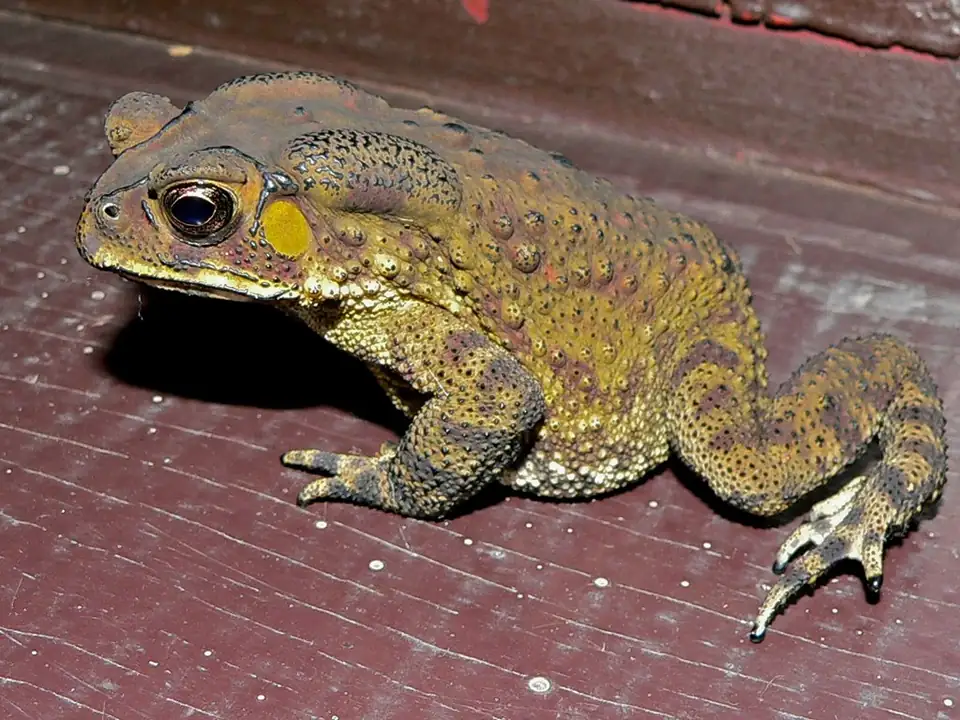
An Asian common toad (Duttaphrynus melanostictus), Khao Yai, Thailand. Photo: Bernard Dupont, CC BY-SA 2.0, via Flickr.
What to do after mouthing a toad
Remove the pet from further exposure and contact an emergency veterinarian immediately. MSD recommends prompt, thorough flushing of oral mucous membranes, while also warning against inhalation of contaminated water or saliva. Because an agitated, weak or seizing animal may aspirate or bite, follow the emergency clinic's handling instructions while travelling; do not force water down the throat and do not induce vomiting.
Stings, centipedes, scorpions and unknown bites
We did not verify which arthropod species caused an individual exposure or publish a claim that a particular Pattaya species is harmless. Move the pet away without handling the creature, photograph it only if safe, and call a vet with the time, location and signs. Breathing difficulty, collapse, seizures, rapidly spreading swelling, multiple stings or a mouth/eye exposure needs emergency care.
Do not improvise medication
Do not give human antihistamines, pain medicines or leftover veterinary drugs unless a veterinarian who knows the patient's species, weight, history and current signs instructs you. Do not cut, suck, burn or tourniquet a bite site.
Reduce exposure without making prevalence claims
Supervise outdoor access, use lighting, remove accessible food and water that attract wildlife, keep storage areas orderly and block safe-to-seal entry gaps. We found no current representative dataset for the frequency of these encounters across Pattaya homes, so this page does not rank local prevalence.
Source and review boundary
Clinical reference: MSD Veterinary Manual: toad poisoning. Checked 1 August 2026; no licensed veterinarian has clinically reviewed this page.
Frequently asked
My dog mouthed a toad. What should I do?
Remove further exposure and phone an emergency veterinarian now. Do not induce vomiting or force water down the throat; follow the clinic's instructions for safe oral decontamination and transport.
Can I identify the risk from a photo?
A photo may help a clinician, but it cannot establish dose or severity. Do not delay veterinary contact to identify the creature.
Can I give an antihistamine for a sting?
Only if a veterinarian who knows the individual pet instructs you. Human products, combinations and doses can be inappropriate.
Is a centipede or scorpion sting harmless?
Do not assume that. Species and patient response may be uncertain; call a vet and seek emergency care for serious or rapidly worsening signs.
Which signs need emergency care?
Breathing difficulty, collapse, seizures, rapidly spreading swelling, multiple stings, severe weakness or a mouth or eye exposure needs emergency veterinary attention.