Before booking, confirm current requirements with the Thai DLD, your airline and the destination-country authority.
Source check details
Thailand’s own steps were checked on 7 October 2026 against the DLD’s manuals; the other sources cited on this page were checked on 1 August 2026. Export rules — Thai DLD procedures, destination-country requirements, airline policies and CDC/APHA rules — change without notice. Use this as orientation, then confirm every current requirement with the DLD and the destination country’s authority before booking.
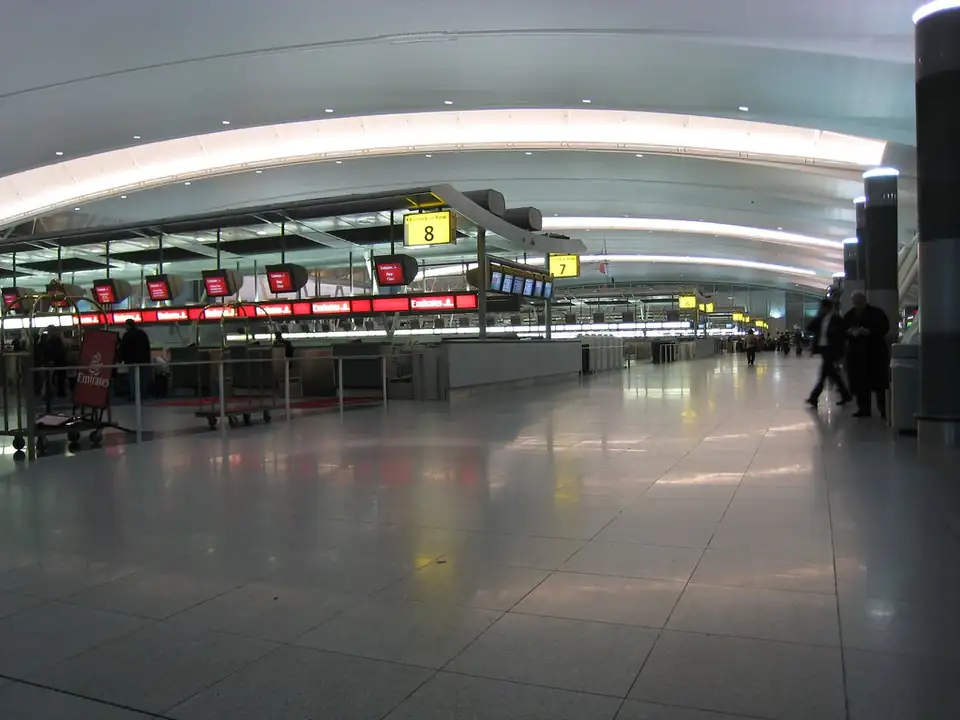
Terminal 4, John F. Kennedy International Airport, New York. Photo: Doug Letterman, CC BY 2.0, via Flickr.
The timeline — dogs from a high-rabies country
CDC rules for dogs changed several times from 2024 onward. The table below is orientation — your dog’s vaccination history and US entry airport determine the exact path. Read the CDC site directly before acting.
Before bookingImporter + veterinarian + CDC facility
Weeks before travelCDC
2–3 days before the flightDLD animal quarantine station
US arrivalCDC / port veterinarian
CDC rules for dogs — what Thailand triggers
A dog vaccinated outside the United States that has been in Thailand during the six months before entry follows the CDC foreign-vaccinated, high-risk-country pathway. The dog must be at least six months old, appear healthy and have a universally readable microchip implanted before its valid rabies vaccination. Thailand risk list; foreign-vaccinated pathway.
You need an endorsed Certification of Foreign Rabies Vaccination and Microchip form and a CDC Dog Import Form receipt. You must also reserve a CDC-registered animal care facility and fly directly to the US airport where that facility is located. The facility examines the dog and revaccinates it with a US-licensed rabies vaccine.
A valid rabies serology titer avoids the standard post-arrival quarantine, but it does not remove the facility reservation. Without a valid titer, the reservation must include 28-day quarantine. For a dog starting with its first valid rabies vaccination, the blood sample must be taken at least 30 days after vaccination and at least 28 days before US entry. Recheck the current CDC pathway before booking because vaccination history can change the preparation sequence. CDC source.
Cats — lighter, but not automatic
Cats face fewer CDC restrictions than dogs, but must still be healthy on arrival and may need documentation depending on airline and state rules. Some US states and airlines impose extra requirements beyond the CDC. Confirm cat rules with the CDC, USDA and your airline before booking.
The Thai export side (DLD)
CDC approval does not replace Thailand’s export process:
| Thai-side document | Notes |
|---|---|
| Export licence (R.9) and health certificate | Thailand’s side: see the DLD export steps. |
| Destination import rules | Show the UK/US/Australian import permit or published requirements to the AQS — the Thai health certificate must match. |
| Identification, vaccinations and tests | Carry the records required by the destination and the responsible AQS; requirements depend on the destination and species. |
See export process and budget in what export costs.
Common mistakes on this corridor
- Starting with Thailand only — destination testing, forms or an approved-country pathway may have a separate calendar and must be checked first.
- Expired titer or vaccination gap — a lapsed rabies shot can invalidate a titer test and restart months of waiting.
- Mismatched microchip numbers — across Thai export papers, airline booking and destination import forms.
- Bringing your pet to the station too early — the health check is no more than 2–3 days before the flight, and the export licence (R.9) is valid 9 days (DLD Region 9 procedure).
- Wrong airport AQS — export paperwork must match the actual departure port; confirm which AQS is responsible.
- Assuming pre-2024 dog-import rules still apply — verify the current CDC page.
- Identification mismatch — follow the current CDC microchip rule and ensure the same identifier appears throughout the records.
- Wrong US arrival airport — a foreign-vaccinated dog must land at the airport where its reserved CDC-registered facility is located.
- Leaving the facility and document review until travel day — the endorsed foreign-vaccination form and facility reservation must already be valid.
If you came the other way, see our guide to From the USA (import).
Departing from Pattaya — confirm the port and DLD sequence
U-Tapao is the nearest airport to Pattaya. It is in Ban Chang district, which the Chonburi animal quarantine station covers (DLD station areas), but the DLD’s list of stations names none at the airport (DLD station map). Get written confirmation from the Chonburi station before you plan a U-Tapao departure; otherwise plan the flight from Suvarnabhumi.
The station’s health check is no more than 2–3 days before the flight (DLD Region 9 procedure), normally at the station of your departure airport unless its vet agrees another place. From Pattaya that can mean the station visit and the flight are two separate trips, so book the visit and the transport together.
Using an agent is optional
An agent cannot change government or airline rules. If you request assistance, obtain an itemised scope and verify each regulated requirement directly with the authority. Pattaya Pets has not independently measured agents’ prices, error rates or outcomes.
Official sources
US sources: CDC animal import; USDA APHIS pet travel. Mirror import guide: bringing a pet from the USA.
Official sources to verify against: DLD Region 9 export procedure; UK pet travel; CDC animal import (USA); EU pet movement; Japan MAFF Animal Quarantine; Singapore AVS; UAE MOCCAE pet import; Australia DAFF; New Zealand MPI; Canada CFIA; Switzerland FSVO.
Frequently asked
Does my dog need a rabies titer test to enter the USA from Thailand?
A valid titer is not the only entry option for a foreign-vaccinated dog on this pathway, but without one the required CDC-registered facility reservation includes 28-day quarantine. The reservation, examination and US revaccination still apply with a valid titer. CDC source.
Where do I check the current US rules?
The CDC governs disease-control import rules for dogs; USDA APHIS covers animal-health certification. Check both directly, plus your destination US state's requirements, before you book.
Can I use the same health certificate that got my dog into Thailand?
No. Export from Thailand requires a fresh DLD export health certificate and export permit. US entry requires current CDC-compliant documentation for the inbound journey.
Should I use a relocation agent for the USA?
An agent is optional. For a dog on the CDC high-risk-country pathway, ask any agent for an itemised scope and verify each CDC, DLD, facility and airline step directly; Pattaya Pets has not measured agent outcomes.
How does this relate to bringing a dog TO Thailand from the US?
Different direction, different rules. See our USA-to-Thailand import guide for the inbound path; this page is Thailand to USA only.
Can I fly my pet out of U-Tapao?
Only if the DLD confirms it in writing. U-Tapao is in Ban Chang district, which the Chonburi animal quarantine station covers (DLD station areas), but the DLD’s list of stations names none at the airport (DLD station map). Ask the Chonburi station in writing whether it can examine your pet and issue the export licence (R.9) for a U-Tapao departure; if not, plan the flight from Suvarnabhumi.
How should I plan the transfer to the departure airport?
Use a vehicle that accepts the animal and crate, confirm the airline’s check-in cut-off and leave route-specific contingency time.
Should I stay near the departure airport?
Decide from the confirmed examination appointment, airline check-in time and road conditions. This guide has no evidence for a universal recommendation.