Before booking, confirm current requirements with the Thai DLD, your airline and the origin-country authority.
Source check details
Thailand’s DLD import steps were checked on 7 October 2026 against the DLD’s manuals. The other Thai import claims were rechecked on 5 August 2026 against Thai consular/DLD guidance updated 2 February 2026. This is an orientation: rules can change without notice. Before booking or travel, confirm every requirement with Thailand’s Department of Livestock Development (DLD), your airline and your origin-country authority.
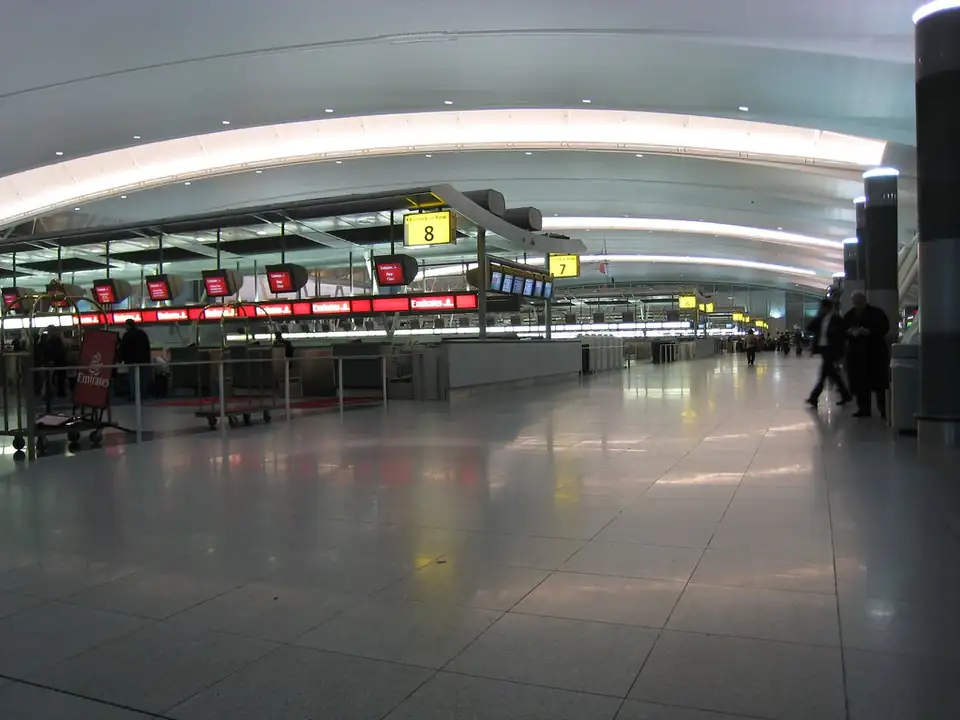
Terminal 4, John F. Kennedy International Airport, New York. Photo: Doug Letterman, CC BY 2.0, via Flickr.
The timeline — what to do when
The Thai Royal Consulate-General in Los Angeles publishes a US-specific checklist (revised January 2025). The order matters: import permit first, then the endorsed health certificate in the final days.
| When | Step | Who |
|---|---|---|
| Before leaving (if US return is possible) | Preserve the microchip and rabies records, check the dog’s likely CDC pathway and do not assume a titer is universally required or sufficient. Thailand is currently on CDC’s high-risk list. CDC source | USDA-accredited vet |
| Before the Thai permit application | Complete all primary vaccines, then wait 21 days; documented boosters are exempt with prior records. Allow 5–7 Thailand business days after the complete application. Thai consulate guide, pets from the USA | Accredited vet |
| ~30 days before departure | Email DLD application form R1/1 with the passport copy, photo, vaccinations and itinerary to the AQS at your arrival airport | DLD AQS (e.g. qsap_bkk_import@dld.go.th for Suvarnabhumi) |
| After permit arrives (5–7 Thailand business days) | Book flight with confirmed pet space; verify airline requires the permit email before check-in | Airline |
| Within 10 days of travel | USDA-accredited vet issues the Official Health Certificate (OHC); submit to USDA APHIS for physical endorsement (stamp) | Vet + APHIS (often via VEHCS) |
| Before departure | Land in Thailand within 10 days of the USDA endorsement date on the OHC | You |
| Arrival | Present original endorsed OHC, original permit printout, passport, vaccination records at the AQS | Suvarnabhumi carousel area / cargo AQS |
Step-by-step pages: microchip, rabies, health certificate and DLD import permit.
The US side: accredited vet and USDA endorsement
Two separate steps, often confused:
- A USDA-accredited veterinarian examines your pet and completes the Official Health Certificate (OHC) for Thailand.
- USDA APHIS physically endorses that certificate — stamps and countersigns the original. Electronic copies alone are not accepted at the Thai AQS; you need the original stamped document.
Most exporters use APHIS’s online VEHCS system to submit the certificate for endorsement, then receive the stamped original before travel. Find your nearest endorsement office on the USDA APHIS pet-travel pages.
The OHC is valid for 10 days from the date of USDA endorsement according to the Thai embassy’s January 2025 guidance. A delayed flight that pushes you past that window can mean re-issuing the certificate — build slack into your schedule.
Documents Thailand expects
At the AQS on arrival you should carry:
- Original traveller’s passport (or pickup person’s passport for cargo)
- Original USDA-endorsed health certificate with stamp
- Printed import permit (the email from the AQS)
- Original vaccination records / pet passport showing microchip number
DLD application and permit
Microchip certificate
Vaccination records
Government-endorsed health certificate
Your passport
Pet photo
Flight booking
The Thai consulate’s guide for pets from the USA directs the importer to present the animal and original documents for AQS inspection. It says the AQS issues Forms R-6 and R-7 and charges 500 baht per animal; confirm the fee for the actual route. Thai consulate guide, pets from the USA. No official source sets a general three-day arrival-confirmation rule; follow any station-specific instruction the AQS sends with the permit. See pet quarantine in Thailand and arriving at Suvarnabhumi.
Operating hours: obtain the cargo or passenger AQS’s current hours directly for the exact arrival mode and date; this page does not publish an unverified universal schedule.
The CDC rules — for the return journey
CDC requirements concern entry into the United States, not the outbound Thai import. Thailand is on CDC’s current high-risk-country list for dog rabies. The return pathway depends on the dog’s six-month travel history and where its rabies vaccination was administered. Current classification.
For a foreign-vaccinated dog with relevant high-risk-country travel, the checked pathway requires a dog at least six months old and appearing healthy, a universally readable microchip implanted before the rabies vaccination, the endorsed Certification of Foreign Rabies Vaccination and Microchip form, CDC Dog Import Form receipt, a CDC-registered animal-care-facility reservation and direct arrival at that facility’s airport. A valid CDC-approved-laboratory titer uses a sample at least 30 days after the first valid rabies vaccination and at least 28 days before US entry; without a valid titer, the facility reservation must include 28 days of quarantine. The facility examines and revaccinates the dog on arrival. This is not the unchanged route for a US-vaccinated dog or for a cat. CDC pathway source.
Read the current CDC decision tree for the individual animal before arranging any test or booking, then see our guide to exporting a pet from Thailand to the USA.
Common mistakes US owners make
- Copied permit sequence — use the vaccination sequence and lead time confirmed for the actual origin by the responsible AQS, not USA-specific deadlines.
- Permit timing — applied too early (expires before you fly) or too late (AQS cannot process in time).
- Airline vs government — confirm the AQS submission method and separately obtain the operating airline’s pre-flight document list; neither is evidence of the other’s rule.
- Health certificate window — endorsed certificate expires before you land; a delayed flight can mean starting again.
- Cargo arrival hours — pets shipped as cargo may only be collected during AQS weekday business hours at some airports.
- Electronic-only health certificate — Thailand wants the original USDA-stamped paper.
- Certificate after endorsement, not from endorsement — the 10-day clock starts on the endorsement date, not the vet exam date.
- Unconfirmed chip compatibility — obtain the implantation record and ask the AQS and airline about the exact chip; do not add a chip or repeat rabies on this page’s authority.
- Ignoring CDC until the return flight — by then it may be too late to meet titer-test timelines.
After the AQS inspection — reaching Pattaya
For pets from the USA, the Thai consulate’s guide says the importer presents the animal and original documents for AQS inspection, and that Forms R-6 and R-7 are issued there. The DLD allows itself up to 1 working day 6 hours to issue the R.7 (DLD import licence manual), so do not plan on same-day release. Thai consulate guide, pets from the USA. After the AQS releases the animal, use a road vehicle that explicitly accepts the animal and crate.
Your R.1/1 goes to the animal quarantine station at the airport you land at, and the import licence (R.7) is issued there (DLD import approval manual). The DLD’s list of stations names none at U-Tapao (DLD AQS map); the Chonburi station covers its district (DLD station areas), so confirm in writing before you book a U-Tapao arrival.
Settling in Pattaya
Confirm pet-friendly housing, save a local veterinary contact and discuss heat and parasite prevention with a veterinarian. Keep every stamped AQS record. For a later UK or EU journey, check the destination’s titer rules. Australia instead requires an approved-country pathway under the standard non-approved-origin route. DAFF FAQ.
Official sources
US sources: USDA APHIS pet export; CDC animal import rules; CDC dog-rabies risk list; foreign-vaccinated high-risk dog pathway; Thai embassy guide (revised January 2025) for the US-specific checklist.
Official sources to verify against: Thai consular/DLD pet-import guide (updated 2 February 2026; its detailed instruction covers only dogs, cats and rabbits from the USA); DLD import application form R1/1 (via the guide or DLD Animal Quarantine stations); Suvarnabhumi AQS import: qsap_bkk_import@dld.go.th.
Frequently asked
Do I apply for the Thai import permit before or after the USDA health certificate?
Before. The Thai embassy’s January 2025 US checklist says to apply for the import permit first (7–60 days before departure), then have the accredited vet issue the OHC after you receive the permit, and then get USDA endorsement — all within the 10-day validity window before arrival. Thai consulate guide, pets from the USA.
Who endorses my pet's health certificate in the US?
A USDA-accredited veterinarian completes it, and USDA APHIS endorses (stamps) the original — generally via the VEHCS online system. Your vet will know the process; build in several days for APHIS processing.
Do CDC rules affect taking my dog TO Thailand?
No. CDC rules govern US entry, not Thai entry. They matter for the return because Thailand is currently on CDC’s high-risk dog-rabies list and the US pathway depends on travel and vaccination history. CDC source.
Is a rabies titer test required to enter Thailand from the US?
The Thai consulate’s guide for pets from the USA does not list a rabies titer as an entry document. A later destination may have its own test and timing rules; check that authority before arranging one.
Which Bangkok airport should I use for Pattaya?
Use the airport whose animal quarantine station handles your arrival: your R.1/1 goes to that station and the import licence (R.7) is issued there (DLD import approval manual). Suvarnabhumi and Don Mueang each each have their own station in the same DLD group (DLD station areas); ask your airline which airport accepts your pet on its route.
Which airport is better for Pattaya — BKK or U-Tapao?
Plan for Suvarnabhumi unless the DLD confirms U-Tapao in writing. Your R.1/1 goes to the station at your arrival airport and the import licence (R.7) is issued there (DLD import approval manual). The DLD’s list of stations names none at U-Tapao (DLD station map); the Chonburi station covers its district (DLD station areas), so ask that station in writing before you book. From Suvarnabhumi, Pattaya is a road transfer.
What should I do after reaching Pattaya?
Confirm housing, save a local vet, keep every AQS document and ask a veterinarian about heat and parasite prevention for the individual animal.
Will I need a titer test later?
That depends on the next destination. UK and EU routes can require a titer and wait. Australia’s standard route from a non-approved origin requires an approved country first; do not assume a test performed in Thailand qualifies.