Clinical review status: no licensed veterinarian has reviewed this publication. It is source-led general orientation, not veterinary advice, a diagnosis, a treatment plan or dosing guidance. Ask a qualified veterinarian about your pet.
Verify the source and the handover
Whether the cat comes from a rescue, private rehoming or breeder, ask for the identity of the current keeper, ownership or surrender authority, age estimate, microchip scan, vaccination and treatment records, known medical or behavioural needs, and written adoption or sale terms. Do not assume a listing means we verified current availability or care.
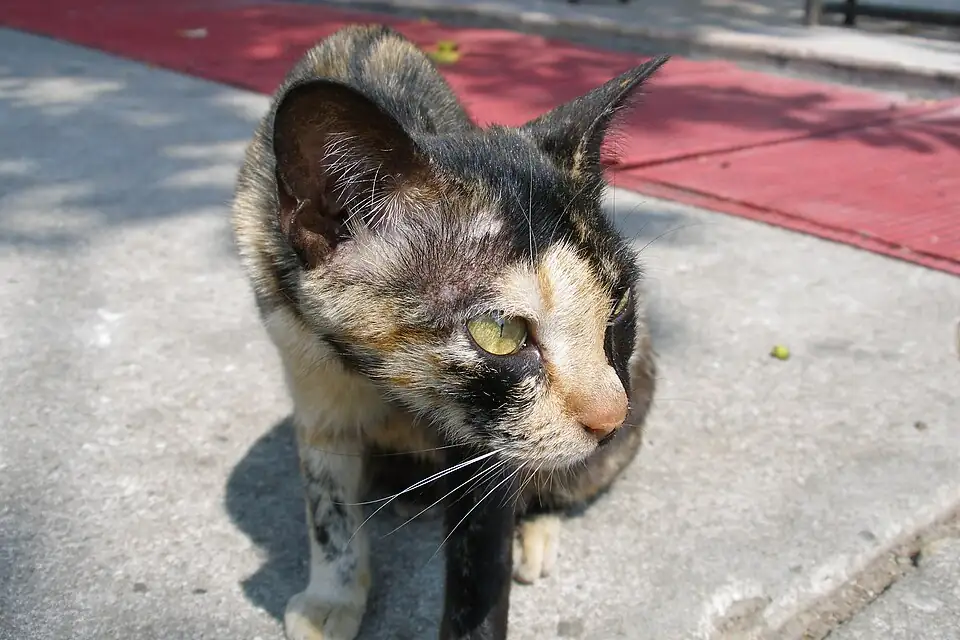
A cat in Tha Ton, northern Thailand (2007). Photo: Vyacheslav Argenberg, CC BY 4.0, via Wikimedia Commons.
Arrange a veterinary check
The Feline Veterinary Medical Association advises a recent veterinary check before introducing a new cat to resident cats. Its new-cat introduction guide also recommends discussing contagious-disease testing with a veterinarian. Keep the newcomer separate until the clinician advises how to proceed.
Create a transition room
Prepare a quiet, secure room with food, water, litter, hiding and elevated resting options, scratching and play resources. Secure windows and balconies. Let the cat choose contact; do not force handling or immediately open the whole home.
Introduce resident cats gradually
Health clearance comes first, then a staged behavioural introduction. The FelineVMA step-by-step guide starts with separation and resource planning. Progress at the cats' comfort rather than a fixed number of days, and seek veterinary or qualified behaviour help if tension persists.
Budget and continuity
Plan for food, litter, housing permission, routine and unexpected veterinary care, transport, identification and care during travel. Confirm actual fees with providers; this page does not publish an unverified Pattaya cost estimate.
Sources and review boundary
References: FelineVMA introduction guide and AAFP retrovirus guidelines. Checked 1 August 2026; no licensed veterinarian has clinically reviewed this page.
Frequently asked
What records should come with a cat?
Ask for current keeper and handover details, microchip information, vaccination and treatment records, known health or behaviour needs and written adoption or sale terms.
Should a new cat meet my resident cat immediately?
No. Arrange veterinary checks, use a separate transition room and follow a gradual introduction process.
Does a rescue listing prove the cat is vaccinated or neutered?
No. Verify the individual cat's current records directly with the organisation and, when needed, the treating clinic.
What should be in a transition room?
Provide food, water, litter, a safe hiding place, elevated rest, scratching and play resources in a secure, quiet room.
How long should introductions take?
There is no reliable fixed duration. Progress only when each cat is comfortable and seek professional help if tension persists.